

The Great Trossachs Forest is a 200-year partnership project restoring heavily grazed hillsides and plantation forestry to a rich and diverse mosaic of habitats full of wildlife.
Since the project started the effects have been transformational. The landscape is healing, and a dynamic ecosystem is bouncing back to life.
Out of adversity comes opportunity
The catalyst for The Great Trossachs Forest project was contamination of the Loch Katrine water supply by the Cryptosporidium parasite; a problem that was potentially linked to sheep grazing in the catchment. As Loch Katrine supplied much of the central belt of Scotland with water, the cessation of sheep farming was recommended to prevent future contamination. In 2005 Scottish Water agreed a long-term lease to Forestry Commission Scotland (FCS), now Forestry and Land Scotland (FLS), to manage the land for biodiversity. Loch Katrine was the vital missing link that connected over 16,000 hectares of land under conservation management, from the Royal Society for the Protection of Birds (RSPB) Inversnaid Reserve on the shores of Loch Lomond to the Woodland Trust Scotland (WTS) Glen Finglas Estate near Callander.
A landscape in recovery
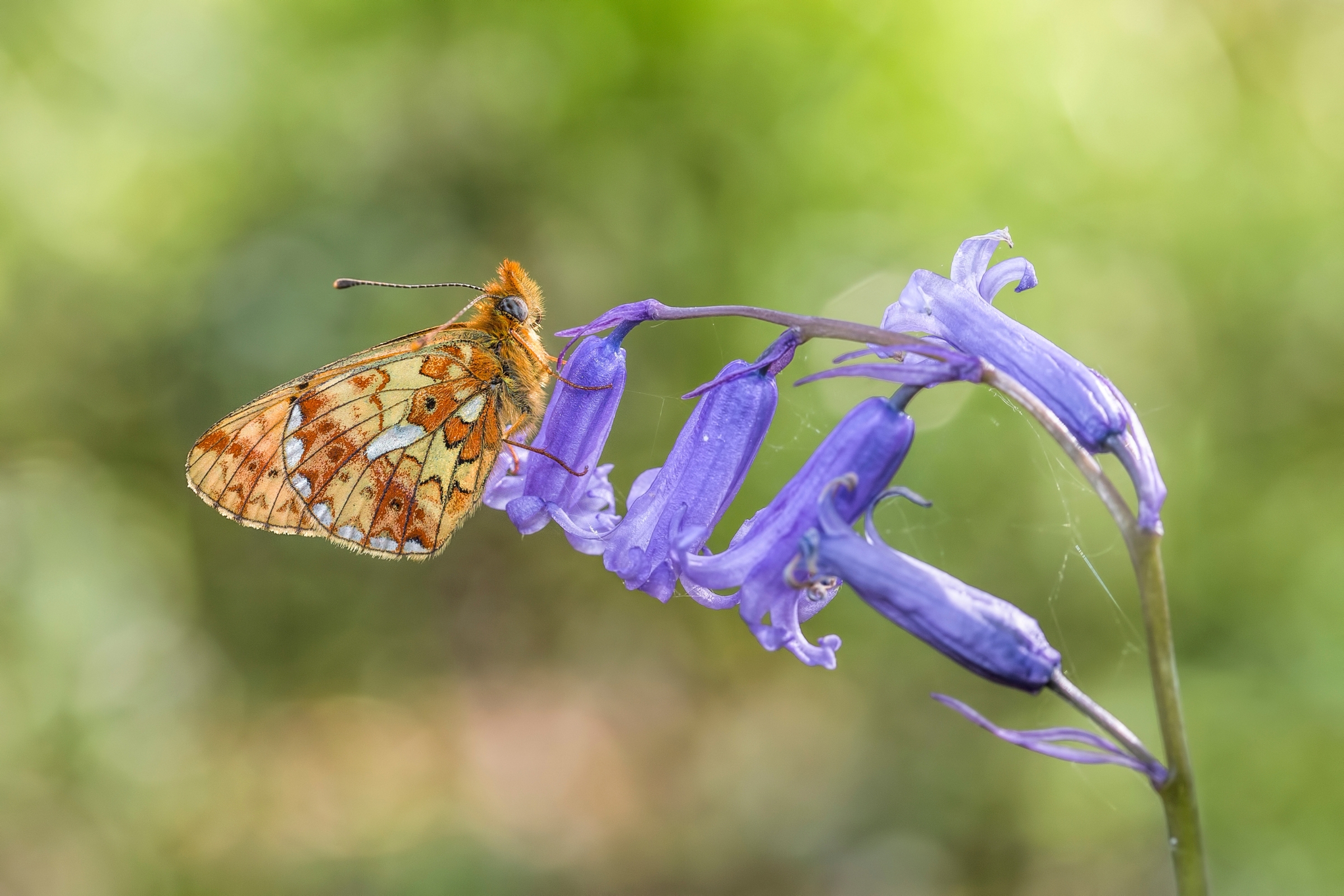
Woodland Trust Scotland, RSPB and FCS agreed a shared vision to create and restore this large contiguous area for the benefit of wildlife and people. At the time it was a progressive and ground-breaking collaborative approach aspiring to revitalise habitats, provide space for nature, boost carbon storage, and sustain a thriving wildlife-rich environment that would benefit our own physical and mental health. A few of the successes to date include 3,000 hectares of new woodland created through planting and natural regeneration, over 400 hectares of peatland on the road to recovery, a 70% increase in the number of lekking black grouse, 100 new sites discovered for the scarce pearl-bordered fritillary, large areas of suffocating Rhododendron ponticum cleared, low intensity livestock grazing helping to improve the condition of habitats, a network of connected and waymarked trails linked to The Great Trossachs Path for visitors to enjoy, and two Visitor Gateways constructed.
History in the making
The area, famous for local legend Rob Roy, has inspired poets, musicians, and artists for centuries, but now the recovery of nature provides another enduring legacy. The rugged landscape is coming alive again. Woodland is expanding up once barren hillsides and life is beginning to flourish again in remote glens. New species are being recorded, but more importantly the abundance of all life overall is greater. Achievements were recognised in 2015, when The Great Trossachs Forest was awarded National Nature Reserve (NNR) status, and the success of the project has since inspired other collaborative landscape-scale restoration initiatives.
 There is more to do
Loch Lomond and the Trossachs National Park Authority (LLTNPA) formally joined The Great Trossachs Forest partnership in 2017. With additional support from Scottish Water, the partnership now has a dedicated Project Coordinator, Craig Whyte, hosted by the Loch Lomond and the Trossachs Countryside Trust (LLTCT) Nature Restoration Team. We are currently working with The Great Trossachs Forest partnership to identify and develop the next phase of projects. So much has been achieved, but there is still peatland to restore, woodland to expand, habitats to recover, biodiversity to support, Rhododendron to eradicate, and many more people to enthuse and connect with.
Discover more If you would like to find out more about The Great Trossachs Forest on their newly refreshed website here, or if you want to get involved, contact us on [email protected].
You can also follow and keep up to date with what is going on in The Great Trossachs Forest on Facebook.
